

EMG for €299, Glasses for ¥1,997: Asia Ships While the West Briefs
Updated September 2026.
Two booths. Same hall. Same week Qualcomm put an NPU on a slide.
Xiaomi put electromyography on a watch you can order today. Alibaba put its AI model on glasses you can pre-order in China now and carry home on Sunday. Neither waited for Apple’s cameras or OpenAI’s unnamed object.
At a glance
- Event
- MWC 2026, Barcelona
- Xiaomi Watch 5
- €299 · Wear OS 6 + Gemini · 930mAh Si-carbon · ~6 days
- Watch sensors
- EMG + IMU + PPG (gesture control)
- Watch chip
- Snapdragon W5 Gen 1 (4nm, 2022) + BES2800
- Qwen G1 (glasses)
- ¥1,997 (~$275) · 12MP camera · no display · Snapdragon AR1
- Qwen S1 (glasses)
- ¥3,799 · mono-green Micro LED waveguide · 2,300 nits
- Assistant
- Alibaba Qwen (translation, capture, agentic checkout)
- Status
- Watch 5 global; Qwen G1 shipped Mar 8 2026 (sold out)
Xiaomi Watch 5: a muscle sensor on a 2022 chip
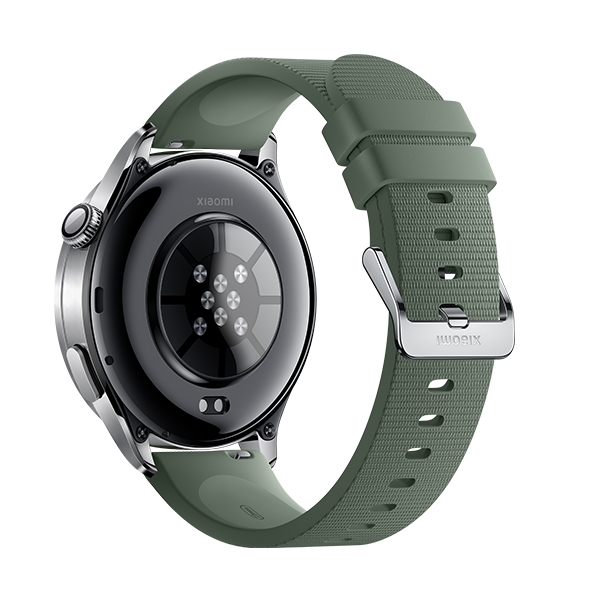
Xiaomi Watch 5 — EMG · PPG · IMU on the back
The Watch 5 is the global version of a watch Xiaomi has sold in China since December, where it runs Xiaomi’s own HyperOS. The global unit runs Google’s Wear OS instead. Price: €299. Case: 47 mm, 316L stainless steel, sapphire glass front and back, 56 grams without the strap. Screen: a 1.54-inch AMOLED. Water resistance: 5 ATM, enough for swimming.
The battery is the quiet headline. It is a 930 mAh silicon-carbon cell, the same battery chemistry Xiaomi uses in its flagship phones. Silicon-carbon cells pack more energy into the same space than conventional lithium-ion, and on a watch that shows up as capacity: nearly double the previous model. Xiaomi rates it at up to six days in smart mode and up to 18 days in power-saving mode. For context, Google’s Pixel Watch and Samsung’s Galaxy Watch are daily or near-daily chargers.
Software is the return ticket. Xiaomi has not released a Wear OS watch since the Watch 2 series. This one ships Wear OS 6 with Gemini built in, plus Google Wallet, Maps, and Play. Xiaomi’s HyperConnect layer still talks to Xiaomi phones, cameras, and smart home devices.
What EMG actually means on this watch
The sentence that matters is the sensor stack: EMG, IMU, and PPG.
EMG, electromyography, measures the tiny electrical signals your nerves send to your muscles. When you move a finger, the command travels through your forearm and wrist, and a sensor pressed against the skin can pick up that signal before, or without, much visible movement. It is the same class of signal Meta reads with its Neural Band, the separate wristband that ships with Ray-Ban Display.
IMU is the motion sensor: accelerometer and gyroscope. PPG is the optical heart rate sensor, the green light on the back of every smartwatch, which also changes slightly when tendons move.
Xiaomi splits the work between them. The two standard gestures, pinch twice and rub twice, use EMG. Three custom gestures, snap fingers, shake wrist, and rotate wrist, are recognized by the motion and optical sensors. The mapped actions are practical: reject a call, silence an alarm, start a workout, fire the phone’s camera remotely, open Gemini.
Apple and Samsung already ship pinch gestures, built on motion sensing. What Xiaomi claims is different: a dedicated EMG channel inside a €299 steel case. In January, that capability required Meta’s $799 glasses and a separate band.
The chip is not the story, and that is the point
The processor is a Snapdragon W5 Gen 1, a 4nm chip Qualcomm introduced in 2022, paired with a BES2800 low-power companion chip for background work. Across the aisle, Qualcomm is launching Wear Elite, with a Hexagon NPU and a two-billion-parameter pitch. Xiaomi is shipping silicon two generations older, with a muscle sensor the new chip does not have to invent.
That is a product choice, not a mistake. The two-chip design, one processor for bursts and one for everything always-on, is exactly how Xiaomi gets six days out of Wear OS. An NPU would add capability and cost power. The NPU can wait. The SKU cannot.
What the global unit does not have is its own cellular connection. The international Watch 5 is Bluetooth and 2.4 GHz Wi-Fi only. The eSIM version stays in China. Outside China, this is still a phone accessory, a very good one.
What is unproven: whether snap and rub survive a winter sleeve, a wet wrist, a crowded commute. Hands-on time at the show was scarce, and some outlets found no watch on Xiaomi’s stand at all. Reviews do not exist yet.
Qwen Glasses: the model company grows a face
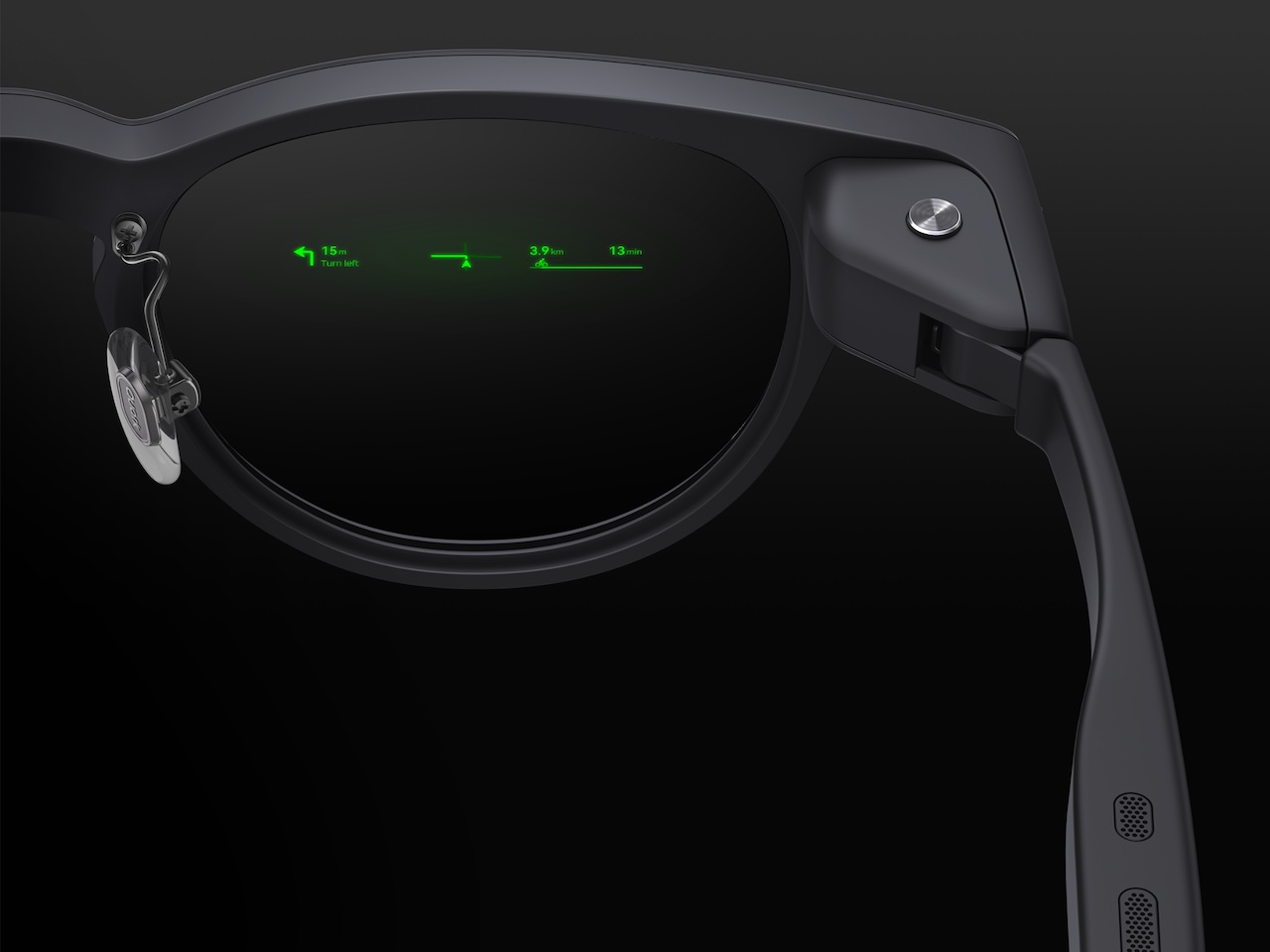
Alibaba Quark / Qwen AI Glasses
Alibaba brought two frames under the Qwen name, the same brand as its AI model and its consumer assistant app.
The hardware is not new to China. In November, Alibaba launched the same product family as Quark AI Glasses, with the S1 at 3,799 yuan and the G1 at 1,899 yuan. Qwen is the new badge on the same engineering team, and existing Quark owners are told they will receive the same updates.
The S1 is the pair with a display. It uses two Micro LED light engines, tiny, very bright light sources, feeding diffractive waveguides, glass lenses etched with microscopic patterns that steer the light into your eye while you still see the world through them. Alibaba quotes up to 2,300 nits of brightness at the eye. Nits measure brightness; a phone screen outdoors peaks in the low thousands, so the figure is aimed at readable text in daylight. The catch is color. The S1’s displays are monochrome green, suitable for text, arrows, and translations, not photos. Meta’s Ray-Ban Display offers one full-color panel. Under the frame is a Snapdragon AR1, the same glasses chip Meta and RayNeo use, plus a BES2800 co-processor, five microphones with bone conduction for voice pickup, and swappable batteries in the temples.
The G1 is the everyday pair, and it has no display at all. It is a camera-and-voice device in the Ray-Ban Meta mold: a 12 MP Sony sensor with a 109-degree ultra-wide lens, 64 GB of storage, and a hot-swappable battery in the right temple, so the glasses keep running while you change it. Official price: 2,899 yuan. After China’s national consumer electronics subsidy and platform coupons: as low as 1,997 yuan, about $275. For comparison, Meta’s display-free Ray-Ban glasses start at $379.
Pre-orders opened March 2. China retail begins March 8. An international version is promised later in 2026, with services not yet specified.
The checkout is the moat
The glasses run Qwen: translation, photo and video capture, meeting notes, visual recognition. The Qwen app is the shell. And from late March in China, Alibaba promises agentic actions on its own rails, starting with food delivery and hotel booking.
That is the actual advantage. Meta has a social graph. Google has search. Alibaba has a checkout, with Taobao for goods, Alipay for payment, and local services behind them. An assistant that can see what you see and then pay for it is a different product from an assistant that can only describe it.
There is no Neural Band. Input is voice, touch on the frame, and the camera. That is narrower input than Meta’s CES week, and wider commerce than anyone in California can ship this month.
What the pairing is
A Chinese watch puts EMG in a price band Google and Samsung do not occupy. A Chinese model lab puts its assistant on glasses cheaper than Meta’s, with a store built in.
Neither is a standalone computer. Xiaomi still needs a phone outside China. Qwen still needs Alibaba’s app graph. Both are finished enough to sell.
The comparison for Qualcomm’s Wear Elite slide is sitting three stands over. The chip with the NPU has no watch. The watch with the muscle sensor has an older chip. Buyers will touch the second one first.
Price is a feature. €299 with Gemini, six days of battery, and an EMG sensor is a different object from a $799 display frame plus a band. ¥1,997 with a 12 MP camera, a swappable battery, and a food-ordering agent is a different object from a rumored pendant.
If the Watch 5 gestures are noisy, it is still a six-day Wear OS watch at mid-tier money. If the S1’s green text disappoints, the G1 still ships as a camera-and-voice pair into a market Meta already proved. The news this week is not a breakthrough in physics. It is a breakthrough in who is willing to cut a purchase order.
The purchase orders were real. The Qwen G1 went on sale in China on March 8, reached the top of the smart glasses bestseller list within three hours, and sold out temporarily across channels. Buyers could order it with a single sentence inside the Qwen app. The checkout thesis did not wait for late March. It sold the glasses themselves.
The line about the chip also aged. In July, Samsung launched the Galaxy Watch 9 on Snapdragon Wear Elite, so the chip with the NPU now has a watch. Xiaomi got to the store shelf four months earlier with an older chip and a muscle sensor. In this category, that head start is the whole argument of this piece.
Want the same rigor applied to your own AI system?
That’s what a QAi Health Check is for.