


AI Is Starting to Compress Business Development and Implementation Cycles
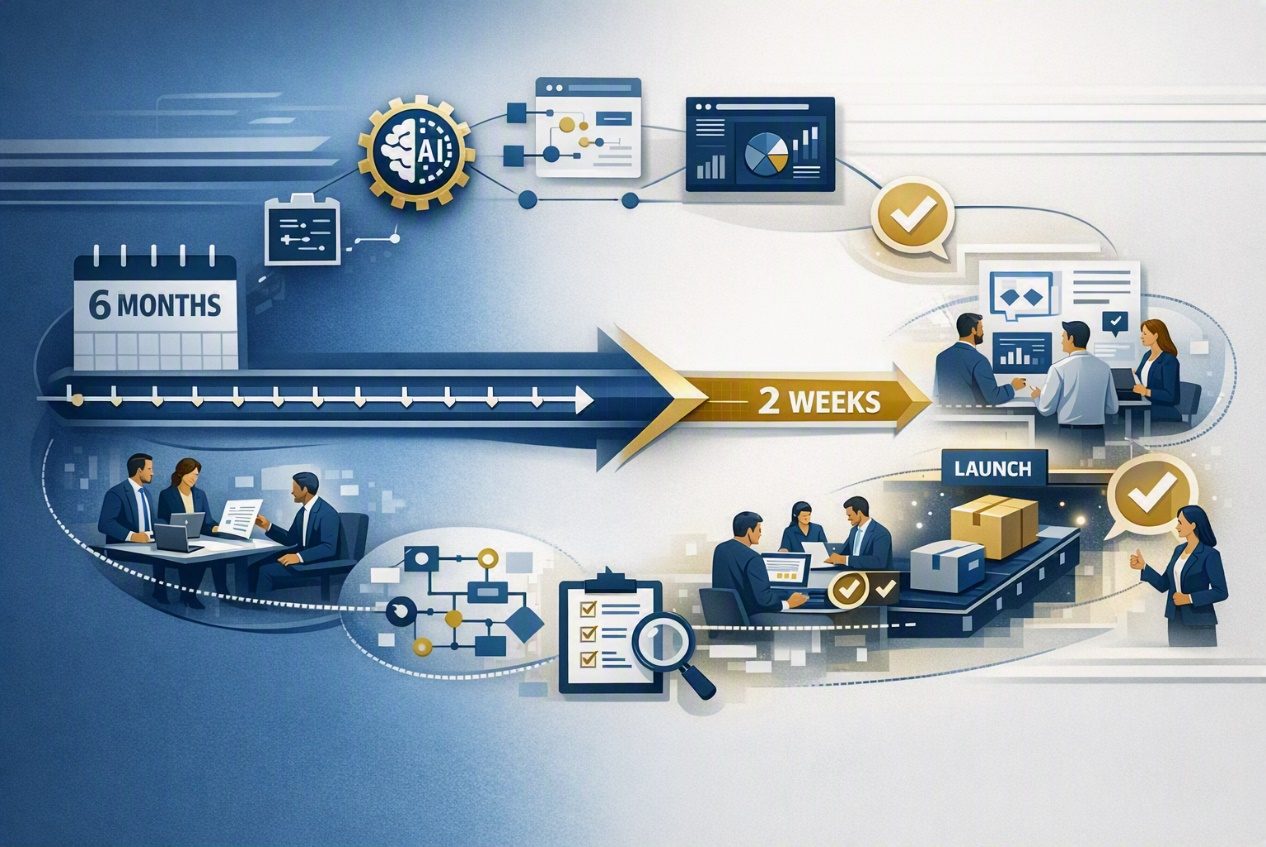
On June 10, 2026, LSEG described how AI is changing the pace of product development and implementation inside a large financial-data organization. The company reported that some product launch cycles that once took roughly three to six months can now be compressed to around two weeks, while certain customer requests can move into production in about four weeks. The lesson for mid-sized businesses is not simply that AI writes code faster. The more important point is that AI can change which business improvements are economically worth doing.
When implementation was slow and expensive, many small process improvements were never approved. A better internal report, a small workflow change, a custom dashboard, a validation step, a pricing tool, or a customer-specific integration might have been useful, but not useful enough to justify months of development. AI-assisted delivery changes that calculation. If small changes can be designed, tested, reviewed, and deployed much faster, the backlog of “not worth it” improvements may become a new source of competitive advantage.
The real productivity gain is not only faster code. It is making small operational improvements affordable enough to actually happen.
Why This Matters to Mid-Sized Companies
Mid-sized companies often live with imperfect systems because the cost of fixing them is too high. Employees export spreadsheets because the ERP report is missing one field. Sales teams maintain side files because the CRM workflow is rigid. Operations teams use email approvals because the internal tool never received budget. Finance teams manually reconcile data because integration work was always deferred.
AI-assisted development can make those small fixes more realistic. A business does not need to rebuild the entire system to gain value. It may need a better report, a validated data flow, an automated checklist, a customer-status view, a smarter intake form, or a lightweight internal app. The strategic opportunity is to close hundreds of small gaps that slow work every day.
Speed Creates a Governance Problem
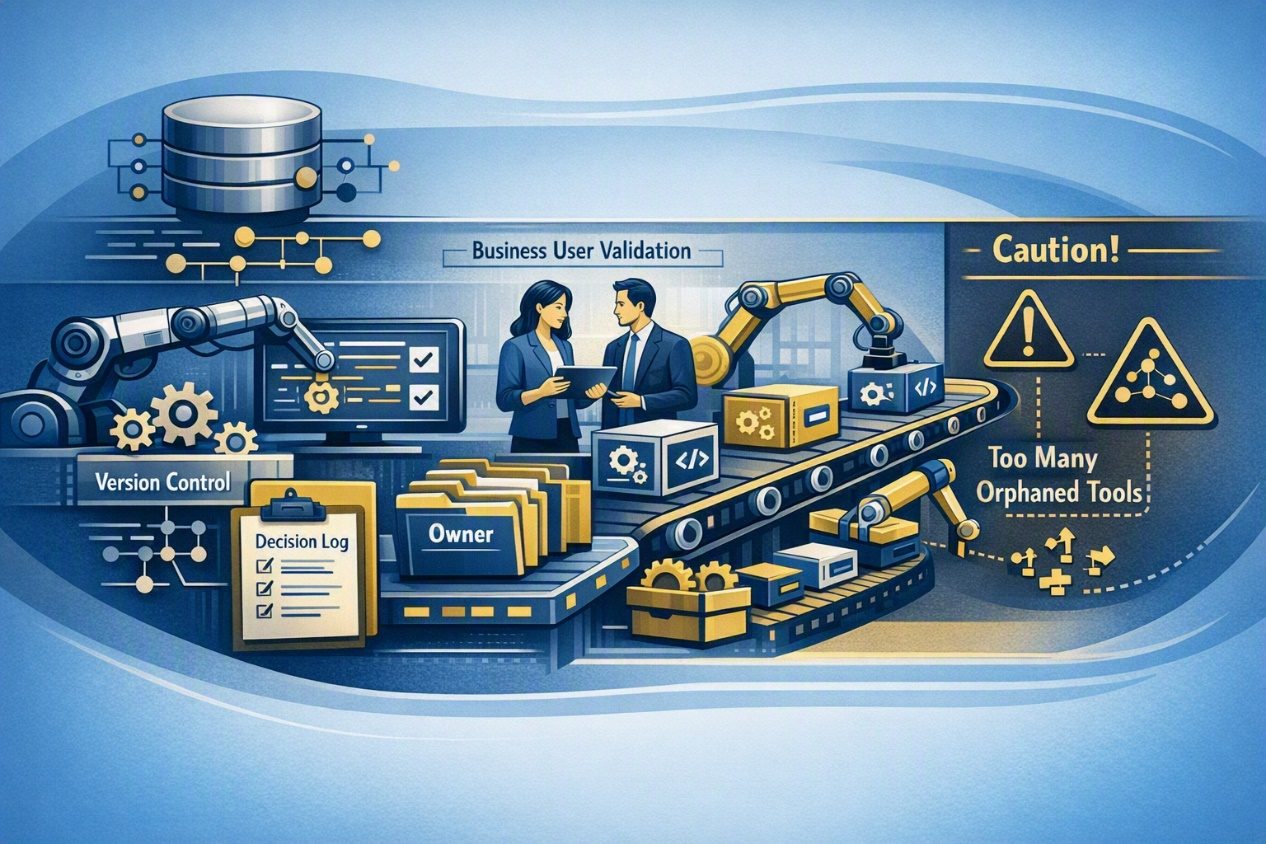
Faster development does not remove the need for discipline. In fact, it increases it. If teams can create tools, reports, automations, and small applications in days instead of months, the business must become better at testing, approval, documentation, and ownership. Otherwise, the company may replace one old problem with a new one: dozens of small AI-assisted tools that nobody owns, nobody maintains, and nobody fully understands.
The danger is not only technical debt. It is business confusion. A pricing tool may use outdated assumptions. A dashboard may calculate a metric differently from finance. A workflow app may skip an approval step. A customer-specific feature may work well for one account but become unsupported when the employee who built it leaves. AI makes creation faster, but governance must make the result dependable.
If every department can build faster, who decides what is safe to deploy, what is worth maintaining, and what should be retired?
DNLA Playbook for Faster AI-Assisted Delivery
- Start with small, measurable gaps. Focus on reports, workflows, validations, and integrations that slow employees every week.
- Keep the business user involved. Faster delivery only helps if the people doing the work validate that the tool solves the real problem.
- Shorten testing cycles. Build lightweight test plans, sample data checks, user acceptance steps, and rollback paths.
- Record decisions. Document why the tool was built, who approved it, what assumptions it uses, and who owns future changes.
- Use version control and release notes. Even small tools need traceability when logic, data fields, or workflows change.
- Prevent orphan tools. Assign every report, app, automation, or integration a business owner and a technical owner.
DNLA Take
LSEG’s experience shows that AI-assisted development is not only a coding story. It is a business-cycle story. When product launches, customer requests, internal reports, workflow tools, and data improvements can move from idea to production much faster, mid-sized companies get a new opportunity: fix the small problems that were previously too expensive to touch. But speed without governance creates risk. Every faster release needs faster testing, clearer ownership, version control, documented decisions, and business-user validation. The winners will not be the companies that build the most tools the fastest. They will be the companies that turn speed into reliable, governed, useful improvement.
Want the same rigor applied to your own AI system?
That's what a QAi Health Check is for.