

Nvidia Brings AI Agents Back to the Personal Computer
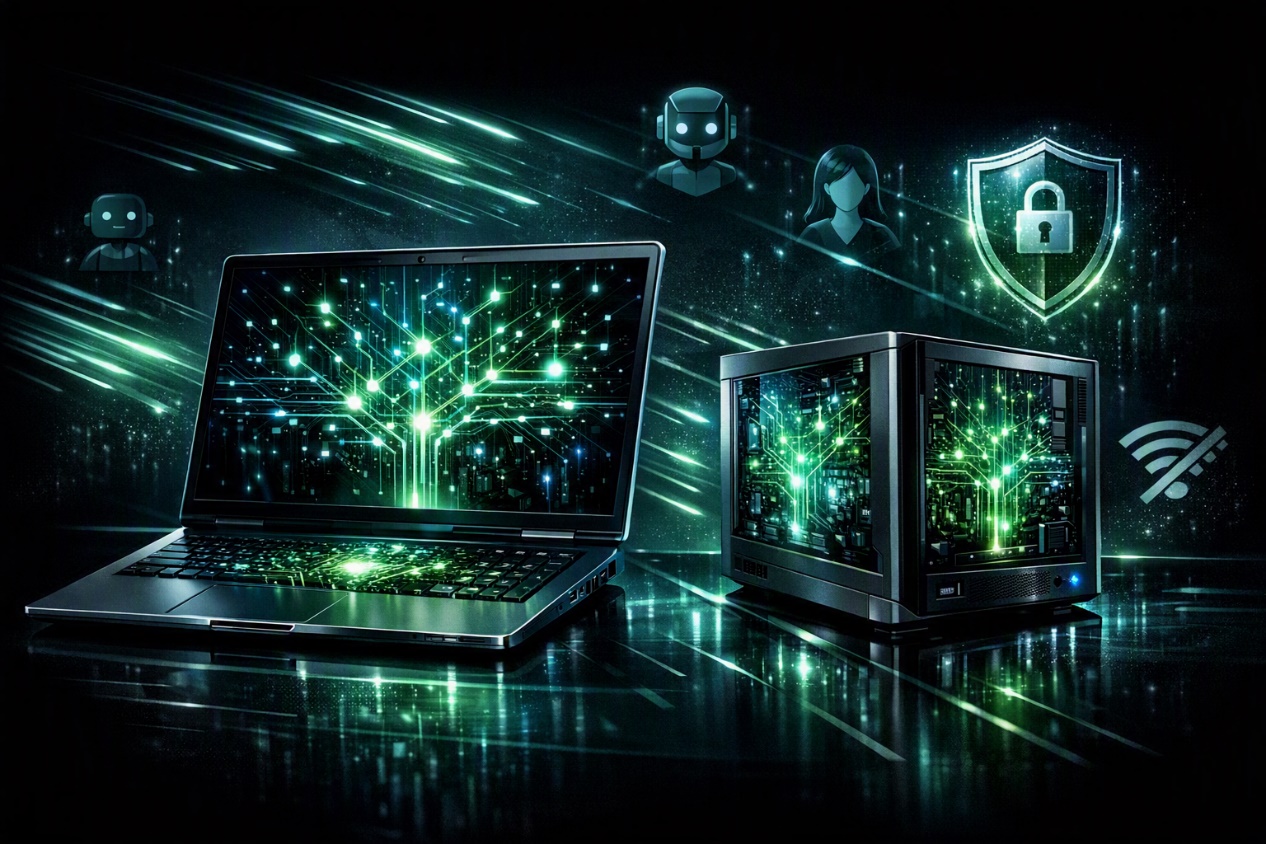
On May 31, 2026, Nvidia unveiled RTX Spark, a new chip platform designed to bring serious AI-agent capability directly into laptops and desktop computers. The announcement, made around the Computex technology gathering in Taipei, showed Nvidia moving beyond the data center and into the personal computer as a place where autonomous AI agents can run locally, respond quickly, and work with user data without sending every task to the cloud.
The system was developed with Microsoft and MediaTek and is expected to appear in PCs from manufacturers including Dell, HP, Lenovo, ASUS, Microsoft Surface, MSI, Acer, and GIGABYTE. Nvidia’s message was clear: the AI PC is not only about adding a chatbot to Windows. It is about giving the machine enough local intelligence to run agents in the background, handle routine tasks, and support creators, developers, and knowledge workers without relying only on cloud-based inference.
If the last AI wave moved intelligence into the cloud, RTX Spark points to the next question: how much intelligence should live on the device itself?
Why Local AI Matters
Most people experience advanced AI through the cloud. A prompt leaves the device, travels to a remote model, waits for processing, and returns as a response. That model is powerful, but it creates trade-offs: latency, connectivity dependence, recurring API costs, and data-governance concerns. RTX Spark is important because it suggests that some agentic work may shift back to the laptop or desktop itself.
From Cloud-Only AI to Hybrid Intelligence
The future is unlikely to be purely local or purely cloud-based. Powerful frontier models will still live in data centers. But everyday tasks may be split across both environments. A local agent might read recent files, prepare a first draft, classify documents, generate code suggestions, or monitor a task list. When the job requires a larger model, broader web knowledge, or enterprise-scale computation, it can escalate to the cloud.
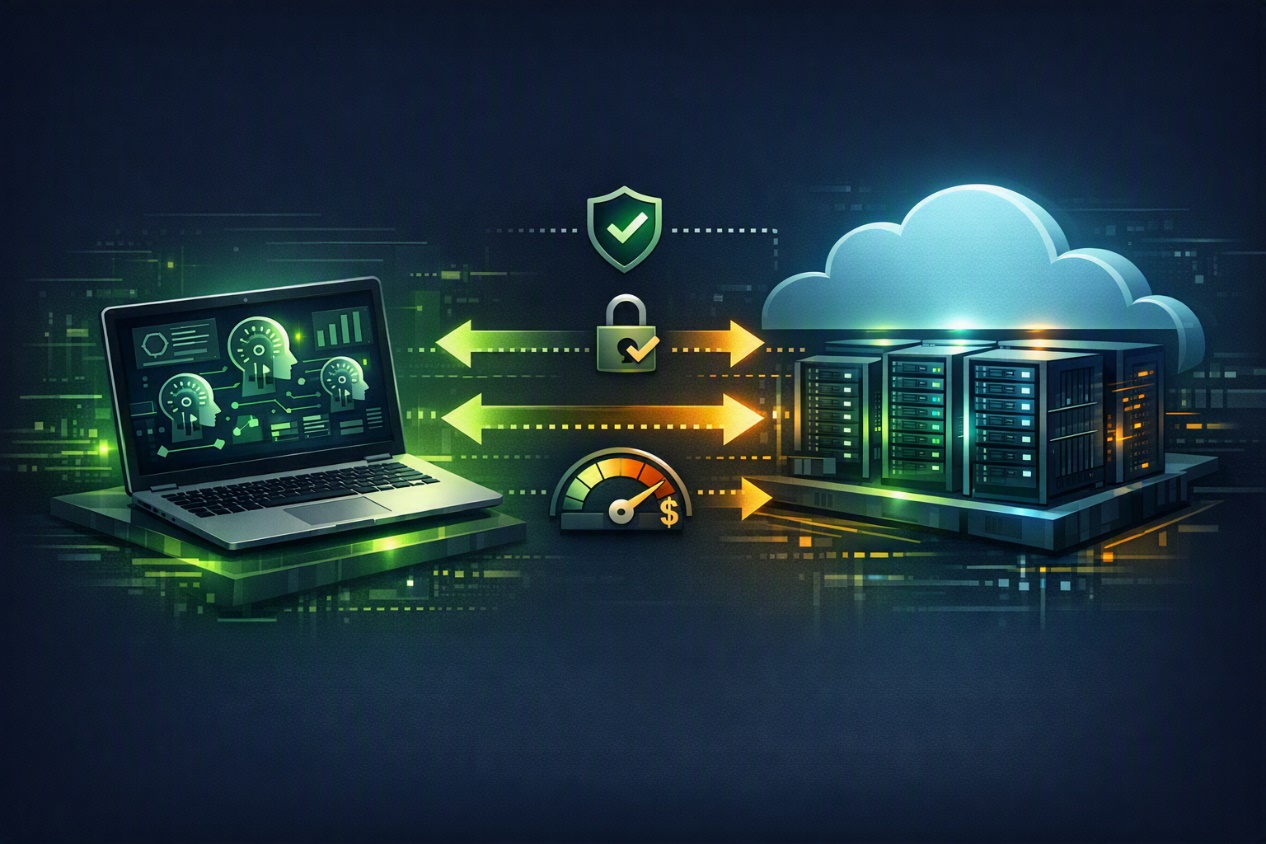
Which AI tasks should stay on the employee’s device, which should go to the cloud, and who decides when the agent is allowed to switch between them?
The Governance Shift: The Endpoint Becomes Intelligent
For years, business security teams treated the laptop as an endpoint to protect and the cloud as the place where intelligence happened. Local AI agents complicate that model. If the PC can reason over documents, monitor folders, call tools, generate code, and automate steps in the background, then the endpoint is no longer just a device. It becomes a decision environment.
That creates a new design problem. Companies will need policies for what local agents can read, what they can write, which apps they may control, when they must ask for approval, and what logs must be preserved. Local processing can improve privacy, but it does not remove risk. An agent that can act on sensitive files still needs boundaries, monitoring, and a clear escalation path.
DNLA Playbook for Local AI Agents
- Classify AI tasks by location. Decide which tasks should run locally, which require cloud models, and which should be blocked until human approval.
- Update endpoint security assumptions. Treat AI-capable PCs as systems that may reason, summarize, generate, and act on local information.
- Protect sensitive folders. Define which documents, customer records, employee files, legal materials, and financial data local agents may access.
- Manage API economics. Identify repetitive tasks where local inference could reduce recurring cloud usage costs.
- Plan for offline workflows. Use local AI to support field teams, traveling executives, sales staff, and employees with unreliable connectivity.
- Require audit trails. Record what the agent read, what it produced, what it changed, and when a human approved the action.
DNLA Take
Nvidia’s May announcement of RTX Spark signals that the AI PC conversation is moving from marketing slogan to architecture. If agents can run locally on laptops and desktops, businesses gain faster response times, offline resilience, better control over sensitive data, and potential reductions in cloud API costs. But the governance challenge moves closer to the employee. The device itself becomes intelligent, persistent, and capable of action. The winners will not simply buy AI PCs. They will decide which work belongs on the device, which belongs in the cloud, and how every agentic action is governed before local intelligence becomes invisible infrastructure.
Want the same rigor applied to your own AI system?
That's what a QAi Health Check is for.