

The Wrist Gets a Brain: Snapdragon Wear Elite at MWC
Updated September 2026.
Qualcomm did not announce a watch this morning. It announced permission for other people to build watches, pins, and pendants that do not have to call the cloud for every sentence.
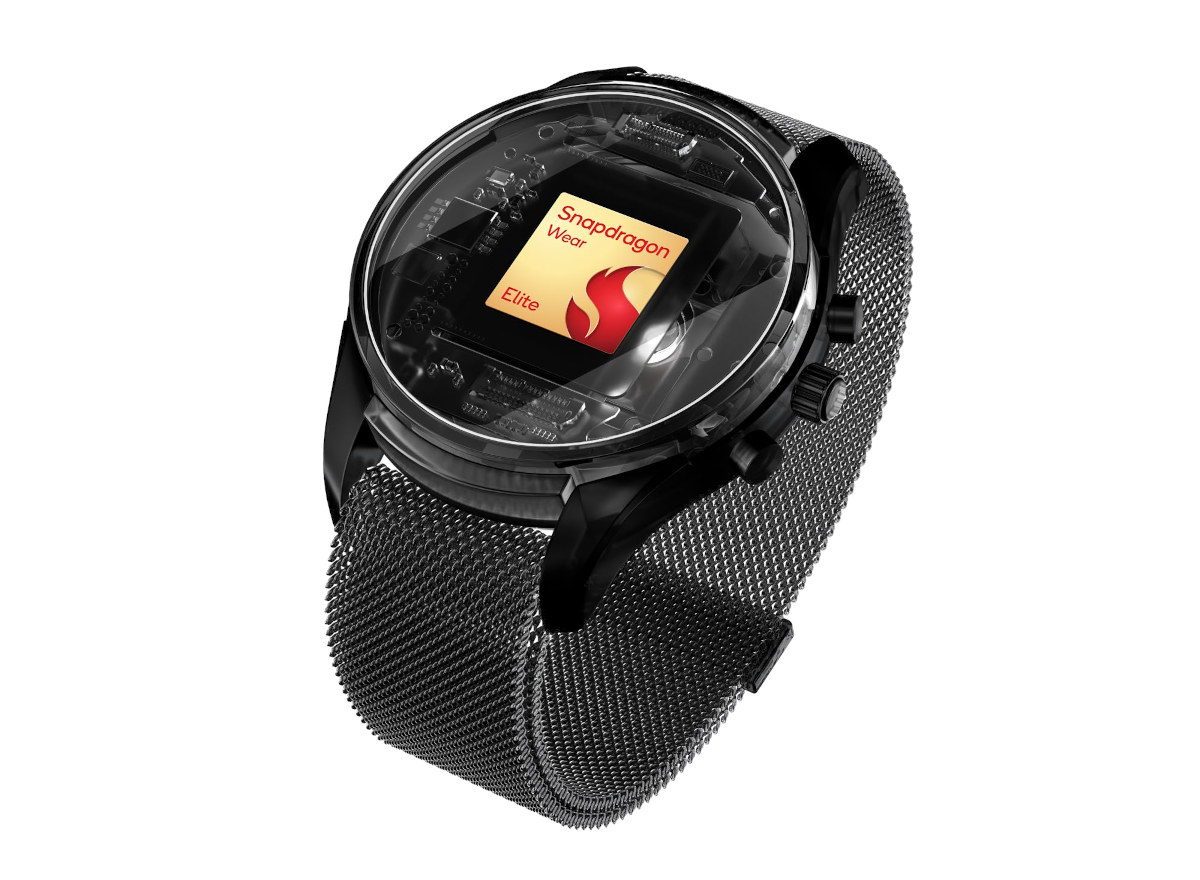
Snapdragon Wear Elite is a new chip platform for wearables, and the headline feature is one that sounds small and is not: it is the first chip in this family with a dedicated Hexagon NPU. Qualcomm says it can run AI models of up to two billion parameters directly on the device, at up to ten tokens per second, with about 12 TOPS of AI throughput. Around that sit a faster processor, a much faster graphics unit, a camera pipeline, and six kinds of radio.
That is the product. The rest is a map of where Qualcomm thinks the body is going.
Quick specs
- Maker
- Qualcomm
- Platform
- Snapdragon Wear Elite (wearables)
- Process
- 3nm
- CPU
- 1×2.1GHz A78 + 4×1.95GHz A55 (big.LITTLE)
- GPU
- Adreno A622 · 1080p @ 60fps
- AI
- Hexagon NPU ~12 TOPS + low-power eNPU
- On-device model
- Up to 2B params · ~10 tokens/s
- Memory
- LPDDR5-6400 · up to 32GB eMMC
- Radios
- 5G RedCap, Wi-Fi 6, BT 6.0, UWB, GNSS, NB-NTN
- OS
- Wear OS, Android, Linux, FreeRTOS
- First device
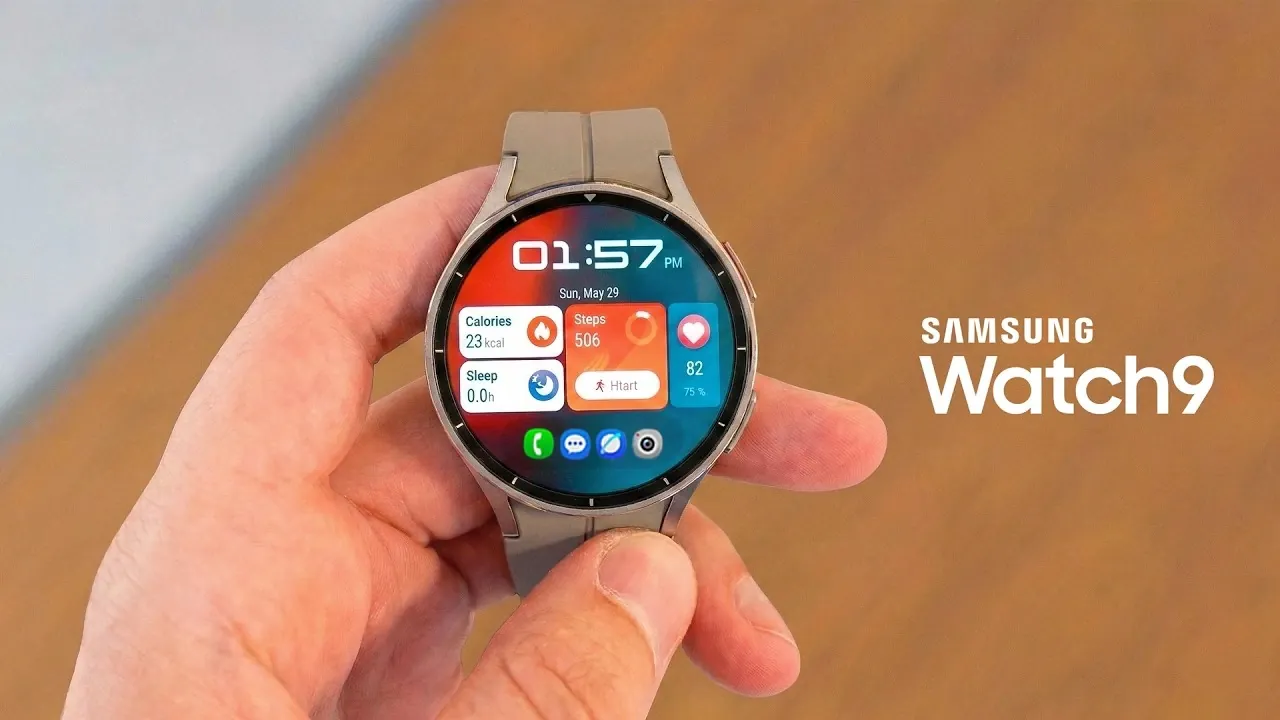
- Samsung Galaxy Watch 9 (Jul 2026)
- Announced
- MWC 2026, Barcelona
First, the vocabulary
Chip announcements are written for engineers. The ideas underneath them are not hard, so here are the ones that matter for this piece.
An NPU, or neural processing unit, is a part of the chip built for one job: the kind of math AI models run on. A regular processor can do that math too, but slowly and at a high cost in battery. An NPU does it faster and far more efficiently. Phones have had NPUs for years. Watches, until now, mostly did not, which is why the assistant on your wrist usually sends your words to the phone or the cloud and waits.
Parameters are a rough measure of a model’s size. More parameters generally means more knowledge and better reasoning, and also more memory and more power. Two billion parameters is a small model. The cloud models behind ChatGPT are not public in size, but they are understood to be many times larger. A two-billion-parameter model will not write your thesis. It can understand a spoken request, summarize a message, or draft a short reply.
Tokens are the pieces models read and write, roughly three quarters of an English word each. Ten tokens a second is about seven or eight words a second. That is faster than people speak and faster than most people read.
TOPS means trillions of operations per second, a raw measure of AI throughput. It is a useful number for comparing chips in the same class and a misleading one across classes. Twelve TOPS is a lot for a watch and modest for a phone.
What is actually on the die
On-device AI: NPU + low-power eNPU
The chip is built on a 3nm process. The number refers to the manufacturing generation. Smaller generations pack transistors more tightly and generally use less power for the same work. It is the same class of process used in current flagship phones, and it matters more on a wrist than anywhere else, because a watch battery is a small fraction of a phone’s.
The processor is a 1+4 design: one 2.1 GHz big core and four 1.95 GHz small cores. This is the first time this family has used what the industry calls big.LITTLE. The idea is simple. The big core wakes up for short bursts, like opening an app, and the small cores handle everything in the background at a fraction of the power. Qualcomm claims up to 5× the single-core speed of its previous top wearable chip, the Snapdragon W5+ Gen 2.
The cores are ARM’s standard designs, a Cortex-A78 and four Cortex-A55, not Qualcomm’s own Oryon cores. That matters for the name. In phones and laptops, “Elite” has meant Oryon. At MWC, Qualcomm said Elite now simply marks the top tier of each product category. Read the name as a price tier, not as phone silicon shrunk to fit a strap.
The graphics unit is an Adreno A622, rated at up to 7× the peak frame rate of the last generation and able to drive a 1080p display at 60 frames per second. For a watch, that mostly means smoother scrolling and animation. For glasses, it could mean something more.
Then there is the second AI engine. Next to the NPU sits what Qualcomm calls an eNPU, a tiny, very low-power AI block for the things that must run all the time: listening for a wake word, recognizing that you started running, filtering noise. It replaces the separate co-processor earlier chips used for this. Qualcomm describes it as one of several low-power “islands” on the chip, small independent sections for audio, sensors, and display that can keep working while the rest of the chip sleeps. That design, more than the big core, is what decides whether an assistant can stay awake all day without killing the battery.
Charging is fast by watch standards: 50 percent in about ten minutes for batteries in the 300 to 600 mAh range, using 9V charging. Qualcomm also claims 30 percent longer day-of-use battery life than the previous generation.
Finally, the camera pipeline. The chip includes a Spectra image signal processor, the component that turns raw sensor data into a usable picture, with connections for two camera sensors. A round watch face does not need that. A pendant, a pin, or a pair of glasses does. That is the tell that this chip is not only for watches.
The memory math behind “ten tokens a second”
One line in the spec sheet explains more than the marketing does. Memory is LPDDR5 at 6,400 MHz on a 16-bit bus, with up to 32 GB of eMMC storage.
Here is why that matters. When a language model writes, every new token requires reading essentially the whole model out of memory. So the speed of a small on-device model is usually limited not by the processor, but by how fast data moves from memory. A 16-bit bus at that speed moves roughly 12.8 GB per second. If a two-billion-parameter model is compressed to four bits per parameter, a common technique, it takes up about one gigabyte. Reading one gigabyte at 12.8 GB per second gives a ceiling of roughly twelve tokens per second.
That is my estimate, not Qualcomm’s, and it rests on an assumption about compression Qualcomm has not published. But it lands almost exactly on the official figure of ten. The number on the slide is not a software limit that an update will lift. It is physics of the memory bus. Bigger models on this chip will be slower, not smarter.
The storage tells a similar story. eMMC is an older, slower storage standard than the UFS used in phones. It is fine for a watch. It means loading a model from storage into memory takes noticeably longer than on a phone, which is one more reason these assistants will keep a small model resident and hand larger jobs to the phone.
Six radios, and why the subset is the product
Connectivity is the other half of the pitch. The platform supports six kinds of radio, and each one is a different promise.
5G RedCap is a slimmed-down version of 5G, designed for devices that need a reliable cellular connection but not phone-level speed, at much lower power. It is what lets a watch make calls and use data with the phone at home.
Micro-power Wi-Fi 6 and Bluetooth 6.0 are the familiar short-range links, tuned for low power.
UWB, ultra-wideband, is a short-range radio that measures distance very precisely. It is what makes item trackers point you to your keys and lets some cars unlock as you approach.
GNSS is satellite positioning: GPS and its European, Russian, Chinese, and Japanese equivalents.
NB-NTN is the newest: narrowband connections to satellites, for sending and receiving short text messages where there is no cellular coverage at all. It is slow, and it is meant for emergencies and remote places, not chat.
OEMs will ship subsets. Every radio costs money, space for an antenna, battery, and certification in every country. Do not assume every Elite watch has a satellite modem because the slide had one. The platform contains the options. The product will contain a subset, and the subset is the product.
Who it is for
Operating systems: Wear OS, Android, Linux, and FreeRTOS, a lightweight system for very simple devices. Google stood next to the announcement and talked about Wear OS becoming an “intelligent system” rather than a tiny phone OS. Samsung, Google, and Motorola are named partners. First commercial devices: “the next few months.” No SKU, no price, no photo of a finished watch.
The Linux and FreeRTOS support is the quiet part. Wear OS means a watch. Linux means anyone building a device that is not a watch and does not want to depend on Google: a pin, a pendant, an industrial wearable, a clip-on camera.
Elite does not replace the W5+ Gen 2, which now becomes the tier below. The older chip keeps the ordinary watch. This one is for anyone who wants an agent on a strap, a pin, or a pendant.
The Samsung line is the real news of the day
Qualcomm Snapdragon Wear Elite
One sentence in today’s announcement matters more than any benchmark. Samsung confirmed that its next-generation Galaxy Watch will run on Snapdragon Wear Elite.
That is a reversal. Since the first Galaxy Watch, Samsung has used its own Exynos chips. Last year’s Exynos W1000 was already built on a 3nm process, so the move is not about manufacturing. It is about the NPU, the radios, and the fact that Qualcomm now builds a wearable chip with the same seriousness it builds phone chips. For years, Wear OS watches were held back by Qualcomm silicon that lagged behind Apple’s. Samsung making its own chip was partly a response to that. Samsung coming back is Qualcomm’s clearest signal that the gap has closed.
It also changes the map of this category. Apple designs its own watch chips. Meta and RayNeo already build their glasses around Qualcomm’s AR1 chip. With Wear Elite, Qualcomm now supplies the face and the wrist for nearly everyone who is not Apple.
Why a chip announcement belongs in this column
January and February on this site were objects: glasses with a radio, a band that writes, three Apple cameras that have not shipped, an OpenAI device that just slipped into 2027. March is the substrate those objects will sit on if they are not Apple silicon.
A two-billion-parameter model on a wrist is not ChatGPT. It is small enough to summarize a notification, draft a reply, run a coach, transcribe a room. The architectural claim is still the one that matters: inference moves off the phone for the first time in this class of device.
There is a privacy dimension to that, and it cuts the right way. A request answered on the wrist is a request that never leaves the wrist. Every piece in this series has ended on a data question: what the glasses record, what the band learns, where the pendant’s camera sends its pictures. On-device inference is the first hardware answer to that question rather than a policy promise. It does not guarantee privacy. It makes it possible.
Pins and pendants only work if the radio and the model can live in a few grams. That is the problem Wear Elite is trying to sell. It is also why the camera interface and the Linux option are more interesting than the 5× CPU slide. A pendant with no display does not need 1080p at 60. It needs a camera pipe, a low-power NPU, and a radio that can stay up without a slab in the pocket. Qualcomm is pricing the same die into both markets.
What is not proven today
Vendor multipliers against W5+ Gen 2 are not reviews. 3nm helps. An extra big core helps. Whether a Galaxy Watch on this chip lasts days with an agent awake is a question for a device that does not exist this morning.
Satellite messaging depends on NTN partners and on regulators. UWB depends on an OEM paying for the antenna. RedCap depends on carriers treating a watch as a modem, and on the price of the plan.
Small models have limits that no chip removes. A two-billion-parameter model makes more mistakes than a cloud model, knows less, and handles fewer languages well. The realistic design is a split: the wrist handles what is fast, private, and simple, and passes the rest to the phone or the cloud. The question for every product built on this chip is where that line sits, and whether the user can see it.
The “Elite” label will confuse buyers who think they are getting a phone CPU. They are not. They are getting a wearable chip that can finally run a small local model without a round trip. That is enough, if the first watches do not throttle it to a demo.
Verdict
This is not a wearable. It is the foundry layer under the wearables everyone else is promising. Google needs it for Wear OS to stop being a notification mirror. Samsung needs it if the next Galaxy Watch is going to pretend it has an assistant. Every pin and pendant maker that does not own its own silicon needs someone else’s NPU. Humane tried to build that whole stack alone and is gone.
Qualcomm just made that NPU a catalogue item. The next few months will show whether anyone ships it as a computer on the wrist, or as a faster watch that still phones home.
The “next few months” held. On July 22, Samsung launched the Galaxy Watch 9 on Snapdragon Wear Elite, the first mainstream Galaxy Watch to run on a Qualcomm chip, ending eight generations of in-house Exynos, and shipped it with Wear OS 7.
The first high-profile product on the chip was a watch, not a pin. The pendant side of the pitch is still waiting for a buyer. Apple postponed its own camera pendant this month, and OpenAI’s first device turned out to be a speaker on a table. The chip was ready for the pendant. The pendant was not ready for anyone.
Whether the Galaxy Watch 9 behaves like a computer on the wrist or a faster watch that still phones home is now a review question, not a slide question. That is progress. It is also exactly the question this column asked in March.
Want the same rigor applied to your own AI system?
That’s what a QAi Health Check is for.